
How to Build an Effective Email Marketing Campaign for startups
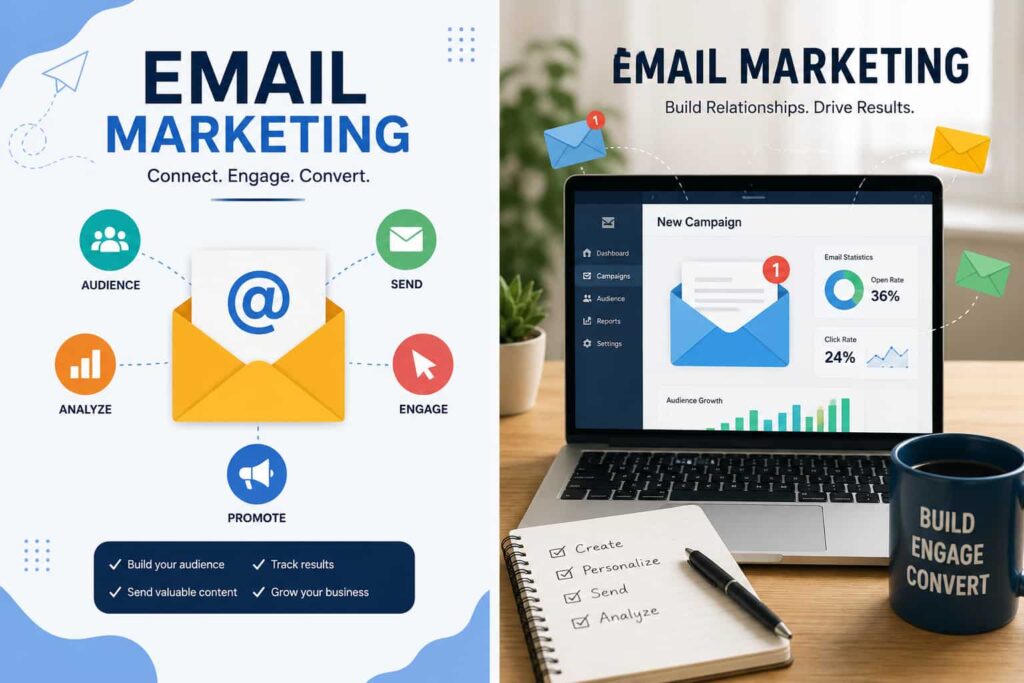
Email marketing is one of the most effective digital marketing strategies for connecting with customers, building relationships, promoting products, and increasing sales. Unlike many other marketing channels, email allows businesses to communicate directly with people who have already shown interest in their brand.
A successful email marketing campaign is not simply about sending promotional messages to a large list of subscribers. It requires proper planning, audience research, valuable content, attractive design, personalization, and continuous performance analysis.
Whether you are a small business owner, digital marketer, blogger, freelancer, or e-commerce professional, learning how to build an effective email marketing campaign can help you generate better engagement and long-term customer relationships.
What Is an Email Marketing Campaign?
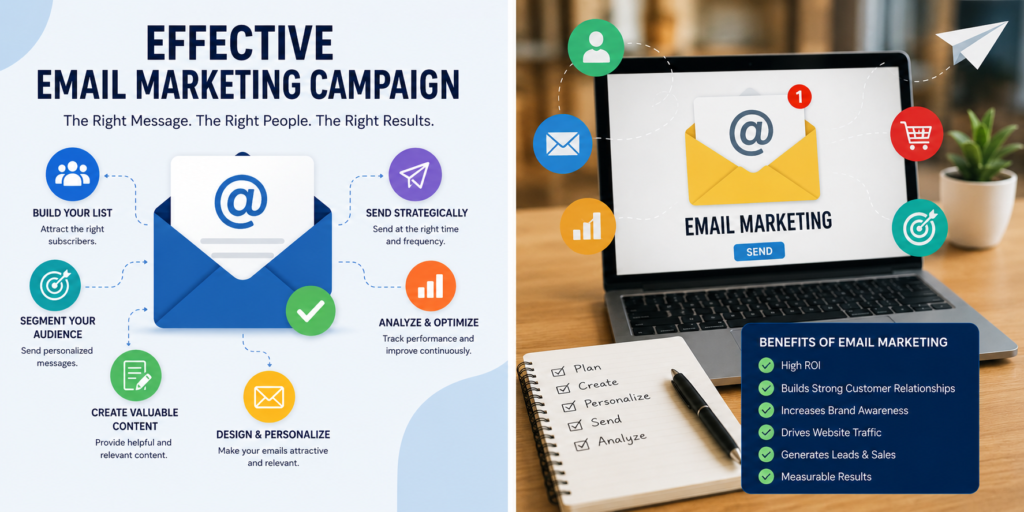
An email marketing campaign is a planned series of emails sent to a specific group of subscribers with a particular marketing goal. The goal may be to promote a product, announce a new service, share useful information, generate website traffic, increase sales, or maintain customer relationships.
For example, an online store may send a welcome email when someone subscribes, followed by product recommendations, special offers, and reminders about abandoned shopping carts.
An effective campaign focuses on delivering the right message to the right audience at the right time.
Why Email Marketing Is Important
Email marketing provides businesses with a direct communication channel with their customers. Social media platforms and search engines can change their algorithms, but an email list gives businesses a valuable way to maintain direct contact with their audience.
Some important benefits include:
- Building strong customer relationships
- Increasing website traffic
- Generating leads
- Promoting products and services
- Improving customer retention
- Increasing sales and conversions
- Sharing valuable educational content
- Building brand awareness
Set Clear Goals for Your Email Campaign
Before creating an email, you should determine what you want your campaign to achieve. A clear goal makes it easier to create relevant content and measure your results.
Define Your Main Objective
Your objective should be specific and measurable. For example, instead of saying, “I want more customers,” you could set a goal such as increasing product sales by 10% during a particular campaign.
Common email marketing goals include:https://amreensaniya.shop/index.php/2026/08/08/how-to-build-an-effective-email-marketing-campaign/
- Increasing sales
- Generating leads
- Promoting a new product
- Increasing website visits
- Improving customer engagement
- Encouraging repeat purchases
- Promoting an event
- Growing your subscriber base
Choose the Right Key Performance Indicators
Once you have established your goal, decide which metrics will help you measure success.https://www.linkedin.com/in/saniya-amreen-67008737a
Important email marketing metrics include:
- Open rate
- Click-through rate
- Conversion rate
- Bounce rate
- Unsubscribe rate
- Revenue generated
- List growth rate
These metrics help marketers understand what is working and what needs improvement.
Build a Quality Email List
A successful email marketing campaign starts with a high-quality email list. Instead of purchasing random email addresses, businesses should focus on attracting people who genuinely want to receive their content.
Use Website Signup Forms
Add signup forms to important pages of your website. You can place forms on your homepage, blog, landing pages, checkout page, or contact page.
Make the signup process simple. Ask for only the information you actually need.
For example, a basic form may ask for:
- Name
- Email address
You can collect additional information later if necessary.
Offer Something Valuable
People are more likely to subscribe when they receive something useful in return. This is often called a lead magnet.
Examples include:
- Free e-books
- Checklists
- Templates
- Discount codes
- Free guides
- Webinars
- Educational resources
- Exclusive content
The offer should be relevant to your target audience and connected to your business.
Avoid Buying Email Lists
Buying email lists may seem like a quick way to gain subscribers, but it can damage your marketing efforts. Purchased lists often contain people who never requested your emails.
This can result in low engagement, spam complaints, high unsubscribe rates, and poor sender reputation.
Focus on building an organic and permission-based email list.
Understand Your Target Audience
Understanding your audience is essential for creating effective email marketing campaigns.
Different customers have different interests, needs, problems, and purchasing behaviors. Sending the same message to everyone may reduce engagement.
Create Audience Personas
An audience persona is a general representation of your ideal customer.
You can consider factors such as:
- Age group
- Location
- Interests
- Profession
- Purchasing behavior
- Problems and challenges
- Goals
- Content preferences
Understanding these characteristics helps you create more relevant email messages.
Segment Your Email List
Email segmentation means dividing your subscribers into smaller groups based on specific characteristics or behaviors.
For example, you can create segments for:
- New subscribers
- Existing customers
- Frequent buyers
- Inactive subscribers
- Customers interested in specific products
- Website visitors
- Customers who abandoned their carts
Segmentation allows you to send more personalized and relevant messages.
Create Valuable Email Content
The quality of your content plays an important role in the success of your email marketing campaign.
Your emails should provide value rather than constantly pushing sales messages.
Write a Strong Subject Line
The subject line is one of the first things recipients see. A strong subject line can encourage people to open your email.
Good subject lines should be:
- Clear
- Concise
- Relevant
- Interesting
- Specific
For example:
“5 Simple Ways to Improve Your Website SEO”
is more informative than:
“Important Information Inside!”
Avoid misleading subject lines because they can reduce trust.
Personalize Your Email Content
Personalization allows you to create a more relevant experience for subscribers.
Instead of sending a generic message, you can personalize emails using information such as the customer’s name, interests, previous purchases, or browsing behavior.
For example:
“Hi Sarah, here are three products you may love.”
Personalization can make communication feel more relevant and human.
Focus on Benefits
When promoting a product or service, explain how it can help the customer rather than simply listing features.
For example, instead of saying:
“Our software includes automated reports.”
You could say:
“Save hours every week with automated reports that organize your marketing data for you.”
The second version focuses on the benefit to the customer.
Design an Attractive Email
Good content needs good presentation. A professional email design makes your message easier to read and understand.
Keep the Layout Simple
Avoid overcrowding your email with too many images, colors, buttons, or sections.
A simple structure can include:
- Logo or brand name
- Headline
- Short introduction
- Main content
- Image or visual
- Call-to-action button
- Additional information
- Footer
A clean design helps readers focus on the most important message.
Make Emails Mobile-Friendly
Many people read emails on smartphones and tablets. Therefore, your email should work properly across different screen sizes.
Use:
- Readable fonts
- Short paragraphs
- Proper spacing
- Responsive layouts
- Clearly visible buttons
- Optimized images
Always test your email on mobile devices before sending it.
Create a Strong Call to Action
A call to action, commonly called a CTA, tells the reader what to do next.
Examples include:
- Shop Now
- Learn More
- Download the Guide
- Register Today
- Start Your Free Trial
- Read the Full Article
- Get Your Discount
Make Your CTA Clear
Your CTA should stand out from the rest of the email. Avoid using multiple competing calls to action unless there is a clear reason.
If the primary goal is to generate sales, the main CTA should direct users toward the product or checkout page.
Choose the Right Email Campaign Type
Different situations require different types of email campaigns.
Welcome Emails
A welcome email is sent after someone joins your email list. It is an opportunity to introduce your brand and explain what subscribers can expect.
A welcome sequence may include:
- Welcome message
- Brand introduction
- Helpful resources
- Special offer
- Product recommendations
Promotional Emails
Promotional emails are used to promote products, services, discounts, or special offers.
Examples include:
- Seasonal sales
- Limited-time discounts
- New product launches
- Special promotions
- Membership offers
Make sure promotional emails still provide useful information and do not overwhelm subscribers.
Newsletter Emails
Newsletters help businesses maintain regular communication with their audience.
A newsletter may contain:
- Blog articles
- Industry news
- Helpful tips
- Company updates
- Product information
- Educational resources
Consistency is more important than sending emails every day.
Abandoned Cart Emails
E-commerce businesses can use abandoned cart emails to remind customers about products they left in their shopping carts.
A simple reminder can encourage customers to return and complete their purchases.
Re-Engagement Emails
Re-engagement campaigns target subscribers who have stopped opening or clicking emails.
You can ask whether they still want to receive your content and provide an incentive for returning customers.
Determine the Right Sending Frequency
Sending too many emails can annoy subscribers, while sending too few can cause people to forget about your brand.
The ideal frequency depends on your audience and business.
You might send:
- Weekly newsletters
- Monthly updates
- Promotional emails during special campaigns
- Automated emails based on customer actions
Monitor engagement metrics and subscriber feedback to determine what works best.
Use Email Automation
Email automation allows businesses to send messages automatically based on specific actions or events.
Examples of Email Automation
Common automated campaigns include:
- Welcome sequences
- Abandoned cart reminders
- Birthday emails
- Purchase confirmations
- Product recommendations
- Re-engagement campaigns
- Follow-up emails
Automation saves time and allows businesses to communicate with customers at appropriate moments.
Build a Simple Welcome Sequence
For example, a welcome sequence could look like this:
Email 1: Welcome and introduction
Email 2: Helpful information or educational content
Email 3: Product or service introduction
Email 4: Customer success story or testimonial
Email 5: Special offer or next step
This sequence can gradually build trust instead of immediately asking for a purchase.
Test Your Email Campaign
Testing is an important part of email marketing. Even small changes can influence engagement and conversions.
Perform A/B Testing
A/B testing involves creating two versions of an email and comparing their performance.
You can test:
- Subject lines
- CTA text
- Email designs
- Images
- Headlines
- Sending times
- Personalization
For example, you could send one subject line to one portion of your audience and another subject line to another portion.
The results can help identify which version performs better.
Test Before Sending
Before sending an email to your entire list, check:
- Spelling and grammar
- Links
- Images
- CTA buttons
- Personalization
- Mobile appearance
- Subject line
- Sender name
- Unsubscribe option
A final review can prevent embarrassing mistakes.
Monitor Email Marketing Performance
After sending your campaign, analyze the results.
Open Rate
The open rate shows how many recipients opened the email. It can provide insight into the effectiveness of your subject line and sender information.
Click-Through Rate
The click-through rate measures how many recipients clicked a link or CTA inside the email.
A low click-through rate may indicate that the content or CTA needs improvement.
Conversion Rate
Conversion rate measures how many recipients completed the desired action, such as making a purchase, filling out a form, or registering for an event.
This is especially important when your campaign has a sales or lead-generation goal.
Unsubscribe Rate
A high unsubscribe rate may indicate that subscribers are receiving too many emails or that the content is not meeting their expectations.
Use this information to improve your strategy.
Follow Email Marketing Best Practices
Following best practices helps create a better experience for subscribers.
Get Permission
Only send marketing emails to people who have agreed to receive them. Respecting subscriber consent helps build trust and supports responsible email marketing.
Provide an Unsubscribe Option
Make it easy for subscribers to stop receiving marketing emails. An accessible unsubscribe option is an important part of responsible email communication.
Maintain Consistent Branding
Use consistent logos, colors, fonts, messaging, and design across your emails. This helps subscribers recognize your brand.
Avoid Spammy Content
Avoid excessive capitalization, misleading claims, and overly aggressive promotional language.
Focus on providing genuine value.
Improve Your Campaign Over Time
Email marketing is not a one-time activity. Successful marketers continuously analyze their campaigns and make improvements.
If an email has a low open rate, consider improving the subject line.
If the open rate is good but clicks are low, review your content and CTA.
If clicks are high but conversions are low, examine your landing page, offer, or checkout process.
This continuous improvement process helps make future campaigns more effective.
Conclusion
Building an effective email marketing campaign requires more than simply writing an email and pressing the send button. It involves setting clear goals, building a quality email list, understanding your audience, creating valuable content, designing mobile-friendly emails, using strong calls to action, and analyzing campaign performance.
Businesses can use different campaign types, including welcome emails, newsletters, promotional campaigns, abandoned cart reminders, and re-engagement emails. Automation and segmentation can make these campaigns more personalized and efficient.
The most important principle is to focus on the needs of your audience. When subscribers receive useful, relevant, and timely information, they are more likely to engage with your emails and trust your brand.
By consistently testing your campaigns, monitoring important metrics, and improving your strategy, you can turn email marketing into a powerful tool for building relationships, generating leads, increasing website traffic, and growing your business.