
Off-Page SEO Strategies: The Complete Guide to Building Authority and Ranking Higher
Introduction
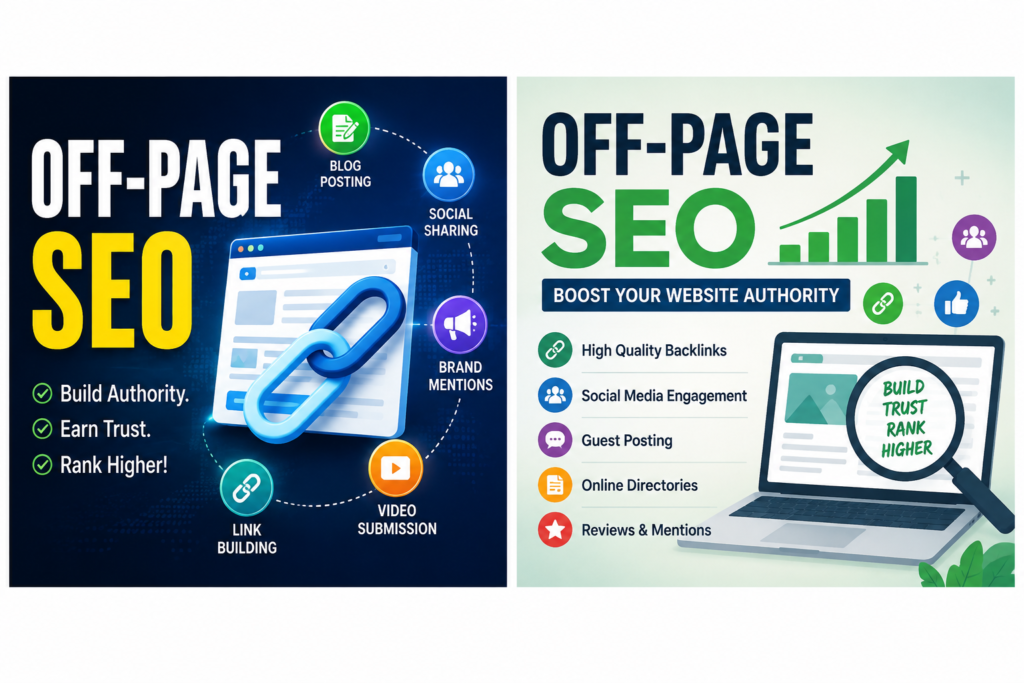
Off-page SEO strategies are one of the most important aspects of search engine optimization. While on-page focuses on optimizing your website’s content and structure, off-page involves all the activities performed outside your website to improve its authority, credibility, and rankings. Search engines like Google evaluate your website based on its reputation across the internet, making off-page strategies essential for long-term success.
A well-planned off-page strategy helps businesses increase domain authority, gain high-quality backlinks, improve brand awareness, attract referral traffic, and build trust with both users and search engines. Whether you own a business website, blog, e-commerce store, or portfolio, implementing effective off-page strategies can significantly improve your visibility in search results.
This comprehensive guide explains the best off-page strategies, their importance, and practical ways to implement them for better rankings.
What is Off-Page SEO?
Off-page SEO refers to all optimization activities that occur outside your website to improve its search engine rankings. These activities primarily focus on building authority, trust, and relevance through external signals.
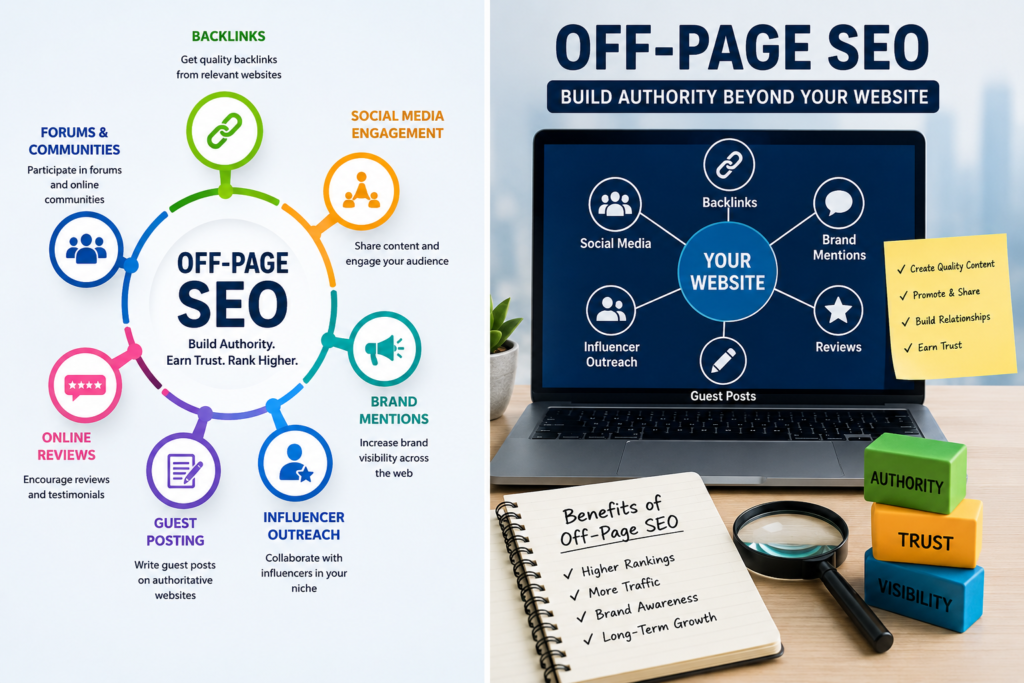
Unlike on-page which involves optimizing titles, content, keywords, and website speed, off-page SEO strategies emphasize:
- Link building
- Brand mentions
- Social media marketing
- Content promotion
- Online reputation
- Influencer outreach
- Local SEO
- Digital PR
Google considers these signals as indicators of website quality and trustworthiness.
Why Are Off-Page SEO Strategies Important?
Off-page SEO offers numerous benefits, including:
- Increases website authority
- Builds trust among users
- Improves search engine rankings
- Generates referral traffic
- Boosts online visibility
- Strengthens brand reputation
- Attracts quality backlinks
- Supports long-term SEO success
Without strong off-page SEO strategies, even excellent content may struggle to rank competitively.
How Search Engines Evaluate Off-Page SEO
Search engines evaluate several external factors, including:
Quality of Backlinks
Links from authoritative websites carry more value than links from low-quality websites.
Relevance
Links should come from websites related to your niche.https://amreensaniya.shop/index.php/2026/08/02/on-page-seo-techniques/
Anchor Text
Natural anchor text improves link quality.
Domain Authority
Websites with higher authority pass stronger SEO value.
Trust Signals
Brand mentions, reviews, citations, and social engagement help establish credibility.
Best Off-Page SEO Strategies
1. High-Quality Link Building
Link building remains the foundation of successful off-page SEO strategies.
Quality backlinks tell Google that your content deserves higher rankings.
Types of Backlinks
Natural Links
These are earned without asking.
Example:
A blogger references your article.
Manual Linkshttps://www.linkedin.com/in/saniya-amreen-67008737a
These are acquired through outreach.
Example:
Guest posting.
Self-Created Links
Created by submitting profiles or directories.
These should be used carefully.
Best Practices
- Focus on quality over quantity.
- Earn links naturally.
- Avoid spammy websites.
- Diversify backlink sources.
- Build links consistently.
2. Guest Posting
Guest blogging is among the most effective off-page SEO strategies.
Writing articles for reputable websites allows you to:
- Gain backlinks
- Reach new audiences
- Increase credibility
- Build relationships
Tips
- Write original content.
- Choose relevant websites.
- Provide value.
- Avoid keyword stuffing.
- Include a natural author bio.
3. Social Media Marketing
Although social signals are not direct ranking factors, they amplify your content and increase opportunities for backlinks.
Popular Platforms
- X (Twitter)
- YouTube
Benefits
- Brand awareness
- Website traffic
- Community engagement
- Content promotion
- Lead generation
4. Influencer Outreach
Partnering with influencers helps promote your content to larger audiences.
Benefits
- Quality backlinks
- Brand mentions
- Increased trust
- Referral traffic
Tips
- Build genuine relationships.
- Offer valuable content.
- Personalize outreach emails.
- Collaborate on mutually beneficial projects.
5. Content Marketing
Great content naturally attracts backlinks.
Content marketing supports off-page SEO strategies by encouraging others to reference your work.
Content Types
- Blog posts
- Infographics
- Videos
- Case studies
- Research reports
- Tutorials
- Guides
- Checklists
6. Broken Link Building
Broken link building involves finding dead links on other websites and suggesting your content as a replacement.
Process
Step 1
Find broken links.
Step 2
Create relevant content.
Step 3
Contact the website owner.
Step 4
Recommend your page.
This technique creates value for both parties.
7. Brand Mentions
Google recognizes brand mentions even without hyperlinks.
Increase Brand Mentions By
- Publishing quality content
- Appearing on podcasts
- Participating in interviews
- Industry collaborations
- Speaking at webinars
8. Forum Participation
Joining industry-related communities helps establish expertise.
Examples include:
- Marketing forums
- Technology communities
- Business discussions
Tips
- Answer questions genuinely.
- Avoid excessive promotion.
- Share helpful resources.
- Build trust first.
9. Question and Answer Websites
Helping users on Q&A platforms increases visibility.
Examples:
- Quora
- Stack Exchange
Provide valuable answers before linking to your content.
10. Social Bookmarking
Social bookmarking helps index content faster and attract visitors.
Popular platforms include:
- Mix
- Scoop.it
Only submit high-quality content.
11. Business Directory Submission
Directory submissions remain useful when submitted to trusted directories.
Include:
- Business name
- Address
- Phone number
- Website
- Categories
Consistency is essential.
12. Local SEO Citations
Local businesses should create citations across trusted directories.
Examples include:
- Google Business Profile
- Bing Places
- Apple Maps
- Yelp
Benefits:
- Local rankings
- Customer trust
- Increased visibility
13. Online Reviews
Reviews influence both rankings and customer decisions.
Encourage satisfied customers to leave reviews.
Best Practices
- Respond professionally.
- Thank customers.
- Address complaints promptly.
- Never purchase fake reviews.
14. Digital PR
Digital PR combines public relations with SEO.
Activities
- Press releases
- Media outreach
- Journalist collaboration
- Expert commentary
Digital PR often earns authoritative backlinks.
15. Podcast Appearances
Podcasts help build authority while earning valuable backlinks.
Benefits include:
- Increased exposure
- Expert positioning
- Referral traffic
- Brand awareness
16. Infographic Marketing
Visual content is highly shareable.
Well-designed infographics attract backlinks from blogs and media websites.
Tips
- Use statistics.
- Keep designs clean.
- Include branding.
- Offer embed codes.
17. Video Marketing
Videos generate engagement and referral traffic.
Platforms include:
- YouTube
- Vimeo
- Facebook Video
Optimize:
- Titles
- Descriptions
- Tags
- Thumbnails
18. Email Outreach
Personalized outreach remains a core off-page SEO strategy.
Outreach Targets
- Bloggers
- Journalists
- Influencers
- Business owners
Effective Email Tips
- Personalize messages.
- Keep emails concise.
- Highlight value.
- Follow up politely.
19. Resource Page Link Building
Many websites maintain helpful resource pages.
Find pages related to your niche and suggest your content.
20. Competitor Backlink Analysis
Study competitors to identify backlink opportunities.
Analyze:
- Referring domains
- Guest posts
- Resource pages
- Mentions
- Partnerships
Then create a stronger outreach strategy.
White Hat vs Black Hat Off-Page SEO
White Hat SEO
Recommended techniques:
- Guest blogging
- Quality backlinks
- Content marketing
- Outreach
- Digital PR
- Brand building
Benefits:
- Safe
- Sustainable
- Long-term rankings
Black Hat SEO
Avoid:
- Buying backlinks
- Link farms
- Automated submissions
- Spam comments
- Private Blog Networks (PBNs)
Risks:
- Google penalties
- Ranking loss
- Manual actions
- Reduced trust
Common Off-Page SEO Mistakes
Buying Low-Quality Links
Cheap backlinks often cause penalties.
Ignoring Link Quality
One quality backlink is worth more than hundreds of spammy links.
Over-Optimized Anchor Text
Use natural anchor text instead of repeating exact-match keywords.
Posting Duplicate Guest Articles
Always publish unique content.
Neglecting Social Promotion
Promote every new piece of content.
Inconsistent Business Information
Ensure your business name, address, and phone number remain consistent across all directories.
Measuring Off-Page SEO Success
Track the following metrics:
Domain Authority
Higher authority generally indicates stronger backlink profiles.
Organic Traffic
Monitor traffic growth using analytics tools.
Referring Domains
More quality referring domains often improve rankings.
Backlink Quality
Focus on relevance and authority.
Keyword Rankings
Track target keyword performance regularly.
Referral Traffic
Measure visitors arriving through backlinks.
Tools for Off-Page SEO
Several tools can help improve your off-page SEO strategies:
Google Search Console
Monitor backlinks and search performance.
Ahrefs
Analyze backlinks and competitors.
SEMrush
Track rankings, backlinks, and outreach opportunities.
Moz
Measure domain authority and link quality.
BuzzSumo
Discover trending content and influencers.
Hunter.io
Find email addresses for outreach.
HARO (Help a Reporter Out)
Connect with journalists seeking expert insights.
Off-Page SEO Best Practices
Follow these proven practices:
- Publish exceptional content.
- Earn backlinks naturally.
- Build relationships within your industry.
- Focus on authoritative websites.
- Diversify your backlink profile.
- Maintain consistent business listings.
- Engage on social media.
- Encourage genuine customer reviews.
- Monitor backlink health regularly.
- Avoid spammy SEO tactics.
Future Trends in Off-Page SEO
As search engines evolve, off-page SEO continues to change. Future trends include:
AI-Powered Search
Search engines increasingly evaluate content quality and authority using AI.
Brand Authority
Strong brands will gain more visibility.
User Experience Signals
Positive user interactions strengthen trust.
E-E-A-T
Experience, Expertise, Authoritativeness, and Trustworthiness will remain key ranking factors.
Digital PR Growth
High-quality media coverage will become even more valuable.
Conclusion
Off-page SEO strategies play a vital role in improving search engine rankings, building authority, and driving sustainable organic traffic. While on-page optimization ensures your website is technically sound and content-rich, off-page SEO demonstrates to search engines that your website is trusted and valued by others across the web.
The most effective off-page SEO strategies include earning high-quality backlinks, publishing guest posts, leveraging social media, engaging in digital PR, building local citations, encouraging customer reviews, participating in relevant communities, and creating exceptional content that naturally attracts links. Avoid shortcuts such as buying backlinks or participating in link schemes, as these can lead to penalties and damage your website’s reputation.
By consistently applying ethical, high-quality off-page SEO strategies and monitoring your progress with reliable SEO tools, you can strengthen your online presence, improve keyword rankings, and achieve long-term growth in search engine results. A patient, value-driven approach will deliver the best results and help your website remain competitive in an ever-changing digital landscape.